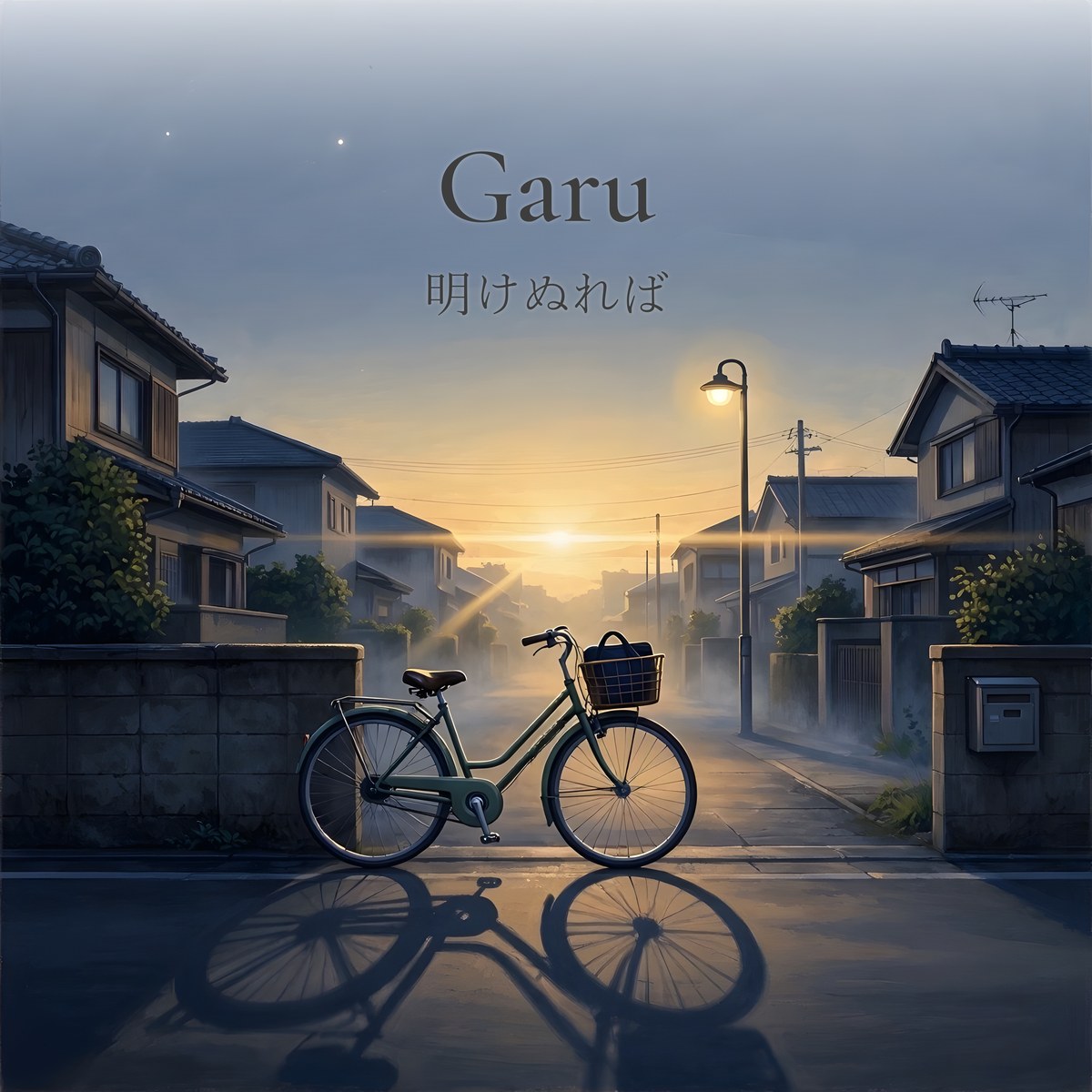
▶I know that when day breaks, night will fall again and I will see you once more — and still, how I resent this dawn.
Fujiwara no Michinobu Ason was a poet of the mid-Heian period, a son of the Chancellor Fujiwara no Tamemitsu. His gift for poetry was recognized while he was still young, and he was a close companion of Fujiwara no Kintō and others, but he died in 994, at only about twenty-three. This poem is Goshūi Wakashū, Love II, 672. In those days a man visited a woman at night and left her house before dawn, and the poem he sent after returning home was called a kinuginu no uta, a "morning-after poem". This is one of them. Asaborake is the hour when the night slowly brightens into dawn.
Once the night is over, the day will soon end again. And when the day ends, I can see you again. I know that. Even so, I resent the dawn that makes us part. The head understands, but the heart does not follow. The poem holds out that honesty just as it is, without a single excuse. What we understand with reason and what the heart can accept are two different things — here is a human figure that has not changed in a thousand years.
What drew us to this poem was one hopelessly honest line: "I know, and I still hate it." Today will end, as it always does. The night will come, as it always does. I know. And still, mornings are hard. Oversleeping, a blank assignment, a mistake at club practice, a lunch break spent alone — a student's day is full of small troubles that have no name. This song does not brush them aside with "do your best"; it starts by answering, "I know." In the second verse we reveal that, a thousand years ago, there was someone who hated mornings too: walking home at dawn from the house of the one he loved, knowing he would see her again that night, and resenting the morning anyway. The pain of mornings has been the same for a thousand years. The song begins in the morning, passes through the school day into evening, says "the morning will come tomorrow, too," and returns once more to a morning's "I'm off." Dawn turns to dusk, and dusk turns to dawn again. We let the song's own hours go around once, just as the original poem said. It is fine to resent it. This is a song cheering on the morning when you can still say, "I'm off," just as you are.
明けぬれば(後拾遺集/藤原道信朝臣・百人一首52番)Garu JP
アラーム三つ 止めた記憶がない
寝ぐせのまんま 靴下 左右ちがう
提出期限は 今日の一限目
白紙のノートが カバンの底で笑う
分かってるんだ 夜はちゃんと来る
今日だって 必ず 終わるってことくらい
明けぬれば 暮るるものとは 知りながら
なほ恨めしき 朝ぼらけ
あさぼらけ あさぼらけ あさぼらけ
それでも行くしか ないじゃんか
あさぼらけ あさぼらけ あさぼらけ
今日をまるごと 走り抜け
千年前にも 朝が嫌いな人がいた
好きな人の家から 帰る夜明けの道
また今夜会えると 分かってるのに
それでも朝が 恨めしいと 詠んだ
千年たっても 朝はやっぱり つらいんだ
なら みんな同じ 胸張って 寝ぼけてけ
明けぬれば 暮るるものとは 知りながら
なほ恨めしき 朝ぼらけ
あさぼらけ あさぼらけ あさぼらけ
千年 前から ずっと おなじ朝
あさぼらけ あさぼらけ あさぼらけ
笑えない日も 朝は来る
部活のミスが 頭を回る
昼休み ひとりで 食べた パン
窓の外ばかり 見てる 五時間目
チャイムが鳴るまで あと少し
夕方 赤い空に あくびが出る
今日も なんとか 終わったじゃんか
明けぬれば 暮るるものとは 知りながら
なほ恨めしき 朝ぼらけ
あさぼらけ あさぼらけ あさぼらけ
明日の分まで 笑っとけ
あさぼらけ あさぼらけ あさぼらけ
何度も 何度も 走り出せ
ねむい わかる
だるい わかる
こわい わかる
それでも 明日も 朝は来る
明けぬれば 暮るるものとは 知りながら
なほ恨めしき 朝ぼらけ
明けぬれば 暮るるものとは 知りながら
なほ恨めしき 朝ぼらけ
あさぼらけ あさぼらけ あさぼらけ
うらめしいまま 行ってきます
あさぼらけ あさぼらけ あさぼらけ
暮れたら きっと 笑えるさ
明けぬれば 暮るるものとは 知りながら
なほ恨めしき 朝ぼらけ
あさぼらけ あさぼらけ あさぼらけ
うらめしいまま 行ってきます
あさぼらけ あさぼらけ あさぼらけ
暮れたら きっと 笑えるさ
あさぼらけ あさぼらけ
あさぼらけ あさぼらけ あさぼらけ
行ってきます
Three alarms — I don't remember stopping any of them
Bed hair as it is, and my socks don't match
The deadline is today, first period
A blank notebook laughs at me from the bottom of my bag
I know it — the night will surely come
I know at least that today, too, will surely end
"Though I know that once it dawns, the day will turn to dusk again,
how I still resent this faint first light of dawn"
Asaborake, asaborake, asaborake (the first light of dawn)
Even so, there's nothing to do but go
Asaborake, asaborake, asaborake
Run straight through the whole of today
A thousand years ago, someone hated mornings too
On the road home at dawn from the house of the one he loved
He knew they would meet again tonight
And still he wrote that he resented the morning
A thousand years later, mornings are still hard
Then we're all the same — chest out, and stay half-asleep
"Though I know that once it dawns, the day will turn to dusk again,
how I still resent this faint first light of dawn"
Asaborake, asaborake, asaborake
The same morning, ever since a thousand years ago
Asaborake, asaborake, asaborake
Even on days you can't smile, the morning comes
That mistake at club practice keeps spinning in my head
The bread I ate alone at lunch break
Fifth period, staring only out the window
Just a little longer till the bell rings
Evening — under a red sky, a yawn slips out
Somehow, today came to an end too
"Though I know that once it dawns, the day will turn to dusk again,
how I still resent this faint first light of dawn"
Asaborake, asaborake, asaborake
Laugh now, enough for tomorrow too
Asaborake, asaborake, asaborake
Again and again, start running
Akenureba (Goshui-shu / Fujiwara no Michinobu Ason, Hyakunin Isshu No. 52) Garu JP
Sleepy? — I know
Tired? — I know
Scared? — I know
Even so, tomorrow the morning will come again
"Though I know that once it dawns, the day will turn to dusk again,
how I still resent this faint first light of dawn"
"Though I know that once it dawns, the day will turn to dusk again,
how I still resent this faint first light of dawn"
Asaborake, asaborake, asaborake
Still resenting it, off I go
Asaborake, asaborake, asaborake
Once the day grows dark, I'm sure we'll be smiling
"Though I know that once it dawns, the day will turn to dusk again,
how I still resent this faint first light of dawn"
Asaborake, asaborake, asaborake
Still resenting it, off I go
Asaborake, asaborake, asaborake
Once the day grows dark, I'm sure we'll be smiling
Asaborake, asaborake
Asaborake, asaborake, asaborake
I'm off!