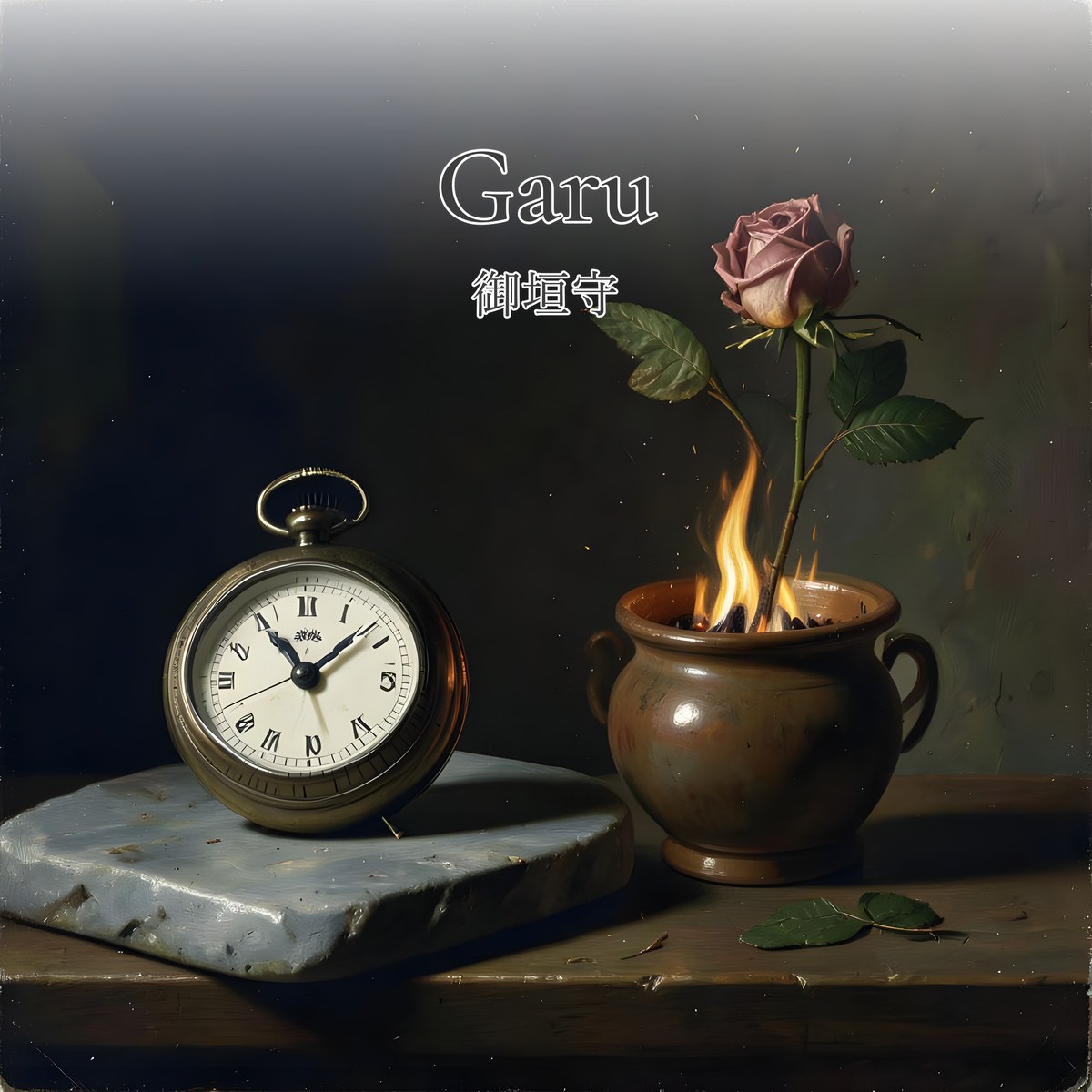
Like the watch fires the guards kindle at the palace gates, my love blazes up by night and nearly dies out by day, yet goes on burning.
Ōnakatomi no Yoshinobu was a mid-Heian poet from a family that served for generations as chief priests of the Ise Shrine. One of the Thirty-Six Immortal Poets, he was also one of the "Five Men of the Pear Chamber" who compiled the Gosen Wakashū at court. Ise no Taifu of poem No. 61 was his granddaughter. Some say the poem is by another author. The "mikakimori" were the guards of the palace gates, who kept watch fires burning all night and put them out in the morning.
As the guards' watch fires burn by night and go out by day, my love flares up every night and by day sinks into brooding as if extinguished. The "tsutsu" says this repeats every single day. The self that burns, and the self that puts the fire out and wears a calm face: the endless flicker itself is the pain of love in this poem.
What drew us to this poem is that the one who loves and the one who keeps watch over that love live inside the same person. By day she says "good morning" to everyone at the same temperature; at night the words she cannot send burn on. She thinks the fire that keeps flaring up, however often she stamps it out, is a beast inside her. But a guard's fire is not meant to burn anything; it lights the night and protects the gate. When she realizes this, she no longer needs to stamp it out. The "good morning" that turns from normal temperature to a slight fever is the sign that she has stopped putting out the fire and decided to become its keeper.
御垣守(詞花集/大中臣能宣朝臣・百人一首49番)Garu JP
朝の改札
制服みたいな 笑顔を着る
「おはよう」は 平熱
あなたにも 同じ温度で
となりの席
書類をめくる この指は
ゆうべ 書いては 消した
名前を 知らないふり
日が昇れば 火に 蓋をして
何もなかった 顔で 門を閉める
見張りは わたし
見張られるのも わたし
みかきもり 衛士のたく火の 夜は燃え
昼は消えつつ ものをこそ思へ
夜ごと 牙をむく 火を 朝には 踏み消して
あなたを 焦がさないように
みかきもり 衛士のたく火の 夜は燃え
昼は消えつつ ものをこそ思へ
消しても 夜が 来るたびに
また 燃えあがる
夜更けの 部屋
画面だけが 篝火
打ちかけの 言葉が
送信の 手前で 燃え残る
夜番の 交代は
いつまでも 来ない
踏んだ 足の裏が
まだ 熱い
いい人で いるほど
夜は 長くなる
獣は どっち
燃える わたしか 消す わたしか
みかきもり 衛士のたく火の 夜は燃え
昼は消えつつ ものをこそ思へ
衛士の 火は 焼くためじゃない
夜を 照らして 守るため
みかきもり 衛士のたく火の 夜は燃え
昼は消えつつ ものをこそ思へ
改札で あなたの 名前を 呼ぶ
「おはよう」は 微熱
みかきもり 衛士のたく火の 夜は燃え
昼は消えつつ ものをこそ思へ
夜ごと たく火で あなたを 照らす
この火の 見張りは わたし
Mikakimori (Shika-shu / Onakatomi no Yoshinobu, Hyakunin Isshu No. 49) Garu JP
At the morning ticket gate
I put on a smile like a uniform
my "good morning" runs at normal temperature
the same warmth for you as for everyone
At the next desk
these fingers turning pages
pretend not to know the name
they wrote and erased last night
When the sun comes up, I put a lid on the fire
with a face like nothing happened, I close the gate
I am the guard
and I am the one being guarded
"Like the fires the palace guards tend, burning by night,
fading by day, so do I burn with longing"
every night the fire bares its fangs, and every morning I stamp it out
so I won't burn you
"Like the fires the palace guards tend, burning by night,
fading by day, so do I burn with longing"
no matter how I put it out, every time night comes
it flares up again
Late at night in my room
only the screen is a watchfire
words half-typed
smolder just short of "send"
The changing of the night watch
never comes
the soles of the feet that stamped it out
are still hot
The longer I play the good person
the longer the nights grow
which one is the beast?
the me who burns, or the me who puts it out?
"Like the fires the palace guards tend, burning by night,
fading by day, so do I burn with longing"
a guard's fire is not for burning
it lights the night to protect
"Like the fires the palace guards tend, burning by night,
fading by day, so do I burn with longing"
at the ticket gate, I call your name
my "good morning" runs a slight fever
"Like the fires the palace guards tend, burning by night,
fading by day, so do I burn with longing"
every night, with the fire I tend, I light your way
I am the guard of this fire