Home / Hyakunin Isshu / Wata no Hara Kogiidete← Takasago no|Se o Hayami →

Hyakunin Isshu No. 76 · Hosshōji Nyūdō (Fujiwara no Tadamichi)Wata no Hara Kogiidete

“Where Sea Meets Sky” — Hosshōji Nyūdō (Fujiwara no Tadamichi)Source: Shikashū, Miscellaneous II · 382
わたの原 漕ぎ出でて見れば ひさかたの
雲居にまがふ 沖つ白波
Wata no hara kogiidete mireba hisakata no
kumoi ni magau okitsu shiranami
Rowing out onto the wide sea plain, I look — and far away,
the white waves of the offing are mistaken for the clouds of the sky.
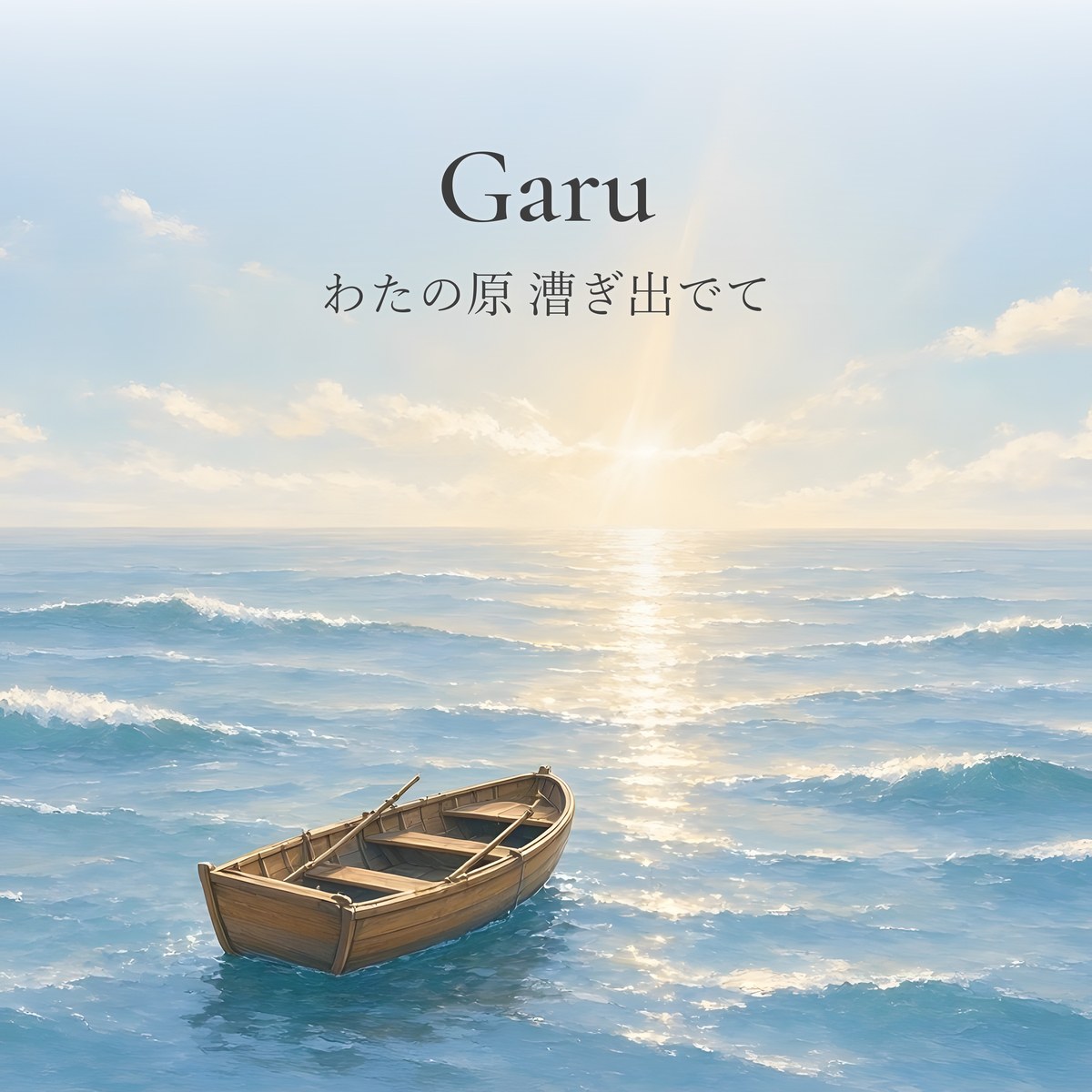
Hyakunin IsshuShika WakashūMiscellaneousAdmirationRadiantA boat on the open sea
Wata no Hara Kogiidete jacket art

What the poem says

Rowing out across the wide sea and looking around, I see white waves far offshore that could be mistaken for clouds.

Music Video

ミュージックビデオ
MUSIC VIDEO — COMING SOON

The Story

歌のものがたり

Historical Background

Fujiwara no Tadamichi (1097–1164), known in the Hyakunin Isshu as the Hosshōji Lay Priest and former Chancellor, was head of the Fujiwara clan in the late Heian period and served in turn as regent, chief adviser and Chancellor of the Realm. He was also a master calligrapher, and his style of writing came to be called the Hosshōji school. In the Hōgen Rebellion of 1156 he stood with Emperor Go-Shirakawa, on the winning side. This poem is Shika Wakashū, Miscellaneous II, 382. It was composed while Emperor Sutoku was still on the throne, at a poetry gathering before him, on the assigned topic 'gazing far out over the sea' — a topic poem, not one written from a real boat. 'Wata no hara' means the wide open sea, and 'hisakata no' is a pillow word attached to the sky and the clouds. For the nobles of the capital the open ocean was a distant world, and that is exactly why the moment the boat pulls away and the view opens up could be painted as one large picture.

The Poet's Heart

Leave the shore, row out, lift your face. Before you there is only sea and sky. The white waves standing far offshore seem continuous with the white clouds, and you cannot tell where the sea ends and the sky begins. The poem says only this; it does not call the view vast, or beautiful. In the single word magau — to be mistaken for — there is the brief bewilderment of the eye that is looking. Then it stops on a noun, 'the white waves of the offing', and leaves the rest to the scene. It is a poem that adds no words before a great view.

What We Put into the Lyrics

The heart of this poem is one word, magau — to mistake one thing for another. The original never says wide or beautiful; it offers only the instant when the border between white waves and clouds disappears, and closes on a noun, 'the white waves of the offing'. We carried this way of showing without saying into the structure of the song itself. Until the boat is out, we drew only the body and its sounds: feet kicking the sand, the oar taking one stroke of water, the voices on the shore growing faint. The view where the border vanishes is never named before the chorus. In the second verse, the white thing that rolls in only rocks the boat and slowly draws away; we did not write whether it was a wave or a cloud. When you search for the horizon, the glare off the sea blinds you. We left the reason you cannot see to the light, and handed the answer to the chorus. There, after the poem is sung, we put the mistaking into today's words as a movement — the border with the clouds of the sky comes undone, the sea and the sky become one. Keep the thing you most want to show until the end, and show it only once. That is our answer to this poem of pure landscape.

Lyrics

歌詞
Japanese

わたの原 漕ぎ出でて(詞花集/法性寺入道前関白太政大臣・百人一首76番)Garu JP

Verse 1

砂を蹴って 舟を押す

櫂が 水を ひとつ掻く

岸の声が 遠くなる

Pre-Chorus

漕いで 漕いで 沖へ出る

顔を上げて 見わたせば

Chorus

わたの原 漕ぎ出でて見れば 久方の

雲居にまがふ 沖つ白波

大海原 漕ぎ出して見れば

沖に立つ 白い波が

空の雲と 境がほどける

海と空が ひとつになる

Verse 2

櫂を上げる

雫が落ちる

舟は流れに まかせる

白いものが 寄せてくる

舟を揺らし

ゆっくり引いてく

Pre-Chorus

水平線を 探しても

光に 目がくらむ

Chorus

わたの原 漕ぎ出でて見れば 久方の

雲居にまがふ 沖つ白波

大海原 漕ぎ出して見れば

沖に立つ 白い波が

空の雲と 境がほどける

海と空が ひとつになる

Breakdown

わたの原 漕ぎ出でて見れば 久方の

雲居にまがふ 沖つ白波

Bridge

雲の影が 海をわたる

白波が 後を追いかける

Final Chorus

わたの原 漕ぎ出でて見れば 久方の

雲居にまがふ 沖つ白波

大海原 漕ぎ出して見れば

沖に立つ 白い波が

空の雲と 境がほどける

海と空が ひとつになる

Outro

沖つ白波

English

I kick the sand and push the boat

The oar takes one stroke of water

The voices on the shore grow faint

Rowing, rowing, out to the open sea

I lift my face and look around

Rowing out onto the wide sea plain, I look — and far away,

the white waves of the offing are mistaken for the clouds of the sky

Rowing out onto the great ocean, I look

The white waves rising far offshore

and the clouds of the sky — their border comes undone

The sea and the sky become one

I lift the oar

Drops of water fall

I leave the boat to the current

Something white comes rolling in

It rocks the boat

and slowly draws away

I search for the horizon

but the light blinds my eyes

Rowing out onto the wide sea plain, I look — and far away,

the white waves of the offing are mistaken for the clouds of the sky

Rowing out onto the great ocean, I look

The white waves rising far offshore

and the clouds of the sky — their border comes undone

The sea and the sky become one

Rowing out onto the wide sea plain, I look — and far away,

the white waves of the offing are mistaken for the clouds of the sky

The shadow of a cloud crosses the sea

The white waves chase after it

Rowing out onto the wide sea plain, I look — and far away,

the white waves of the offing are mistaken for the clouds of the sky

Rowing out onto the great ocean, I look

The white waves rising far offshore

and the clouds of the sky — their border comes undone

The sea and the sky become one

White waves of the offing

Wata no Hara Kogiidete (Shika-shu / Hosshoji Nyudo Saki no Kanpaku Daijo Daijin, Hyakunin Isshu No. 76) Garu JP
← No. 73 Takasago no All Songs Share on 𝕏 No. 77 Se o Hayami →