The life I once thought I would gladly give for you — now that we have met, I find myself wishing it would last a long time.
Fujiwara no Yoshitaka (954–974) was a poet of the mid-Heian period, a son of the regent Fujiwara no Koretada (Kentokukō, author of poem 45) and the father of Fujiwara no Yukinari, one of the three great calligraphers. He was a young nobleman known for his beauty and his deep Buddhist faith, and is one of the Thirty-Six Poetic Immortals of the Middle Antiquity. This poem is Goshūi Wakashū, Love II, 669, headed 'Sent on returning from a woman's house': a kinuginu, or morning-after poem, sent the same day after a night spent with a lover. Until they met he had thought, 'If I can be with you I will not grudge my life.' Now that they have met, that life has become precious: the joy of meeting turned 'I could die' into a wish to live long. In 974 Yoshitaka caught the smallpox then sweeping the capital and died at only twenty-one. His elder brother Takakata died of the same disease that same morning, and the brothers were mourned as 'the morning captain and the evening captain'. The man who wished 'let it be long' did not live long.
Until yesterday he did not grudge this life. If he could only be with her, he truly thought, nothing else would matter. And then, this morning, having met her and come home, he finds that he has changed. He wants to live long, because he wants to be with her more. 'Omoikeru kana' is the voice of someone surprised at the change in his own heart. It is not a grand vow but a quiet discovery made on the way home. Love can make a person reckless, and it can also make a person take care of himself. A young man barely twenty put that turning point into a poem just as it was.
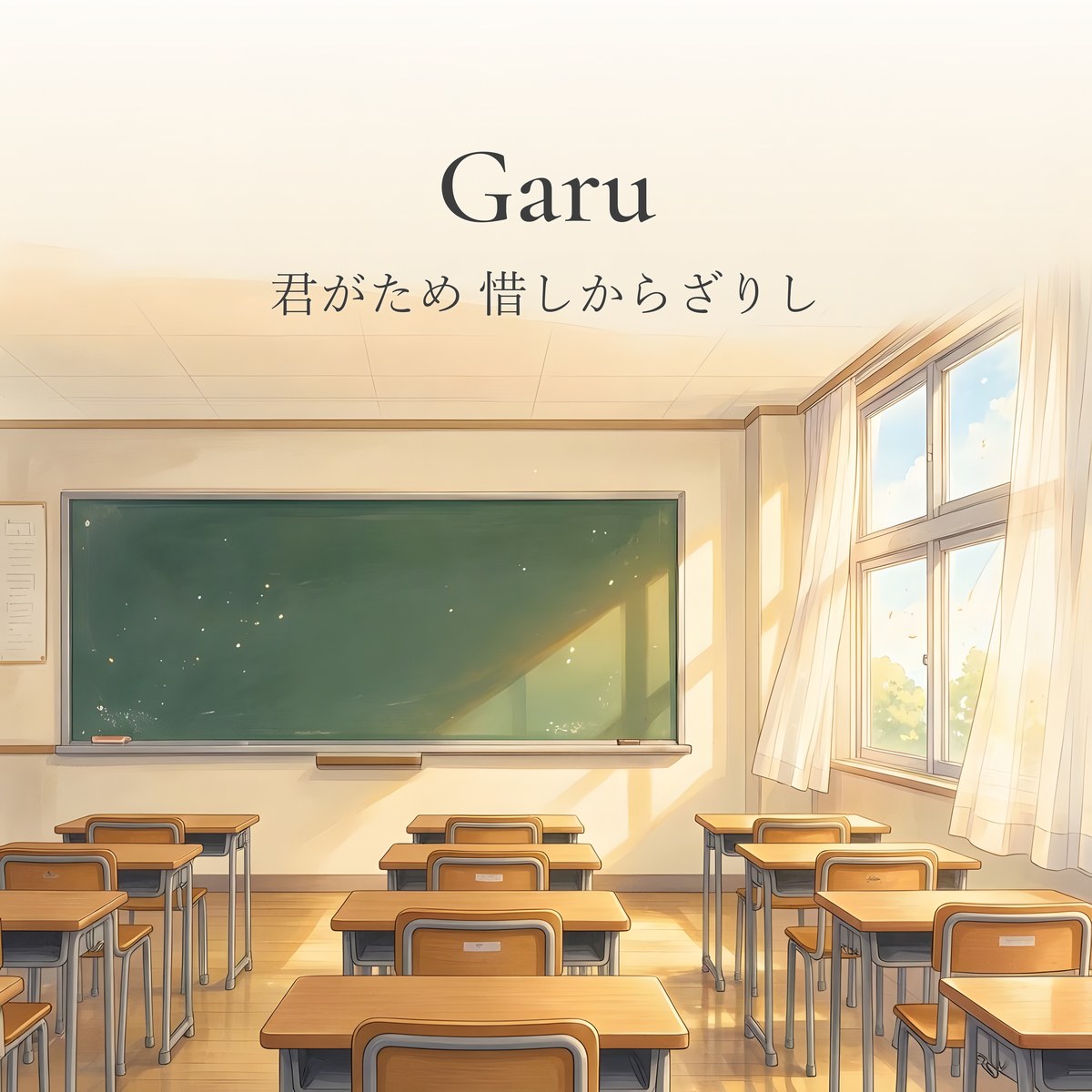
What drew us most to this poem is the turn: someone who thought 'I could die happy after one meeting' finds, the moment love is returned, that he wants to live long — and is more surprised by it than anyone. The poem was sent the morning after the lovers were united; we moved it into a high-school love of today. He prayed for the seat next to hers every time the class changed seats, practiced calling her name, and thought one conversation would be enough, that it could end like this and he would not mind. At last he says, 'May I walk next to you?', and she says 'Sure.' For the first time the two of them go to the sea. The hand he holds out is shaking; she laughs and takes it; before he knows it he is shouting 'Let's come again.' What matters is not just thinking of someone, or just meeting them, but making memories together with all your heart — to find your life precious, we read, is to want to fill its time with memories. The chorus sings the poem as it is and then translates it: 'For you, I never minded spending it — this time is precious to me now.' The poem's word is 'life'; in the lyrics we rendered it as 'this time', the time spent with you, because we think a life is the time you share with someone. The poem's own phrase 'nagaku mo gana' is repeated like a password and lands on 'once is no longer enough'. The numbers in the lyrics grow: once (when he only longed for her), a hundred years of memories (the boy he is now), a thousand years (the bridge). Yoshitaka left this world at twenty-one. And yet the song that wished for a long life has lived a thousand years and is here. The 'I want to live long' of someone who could not is sounding again, in the same shape, in the heart of someone who has just fallen in love. That is what we put into this song.
君がため 惜しからざりし(後拾遺集/藤原義孝・百人一首50番)Garu JP
席替えで となりを祈った
名前を呼ぶ 練習をした
一度 話せたら それでいい
このまま終わっていいと 思ってた
やっと言えた 「となり 歩いていい?」
きみは うなずいて 「いいよ」と言った
君がため 惜しからざりし 命さへ
長くもがなと 思ひけるかな
きみのためなら 惜しくなかった
この時間が いまは 惜しい
長くもがな 長くもがな
一度じゃ 足りなくなった
はじめて ふたりで 海へ来た
さし出す手が ふるえていた
きみは笑って その手を 取った
ぼくは 「また来よう」と 叫んでた
一度でいいと 言ってた口で
百年ぶんの 思い出が ほしい
君がため 惜しからざりし 命さへ
長くもがなと 思ひけるかな
きみのためなら 惜しくなかった
この時間が いまは 惜しい
長くもがな 長くもがな
一度じゃ 足りなくなった
いにしえの 歌詠み人は
若くして 世を去った
それでも 長くと 願った歌は
千年 生きて ここにある
君がため 惜しからざりし 命さへ
長くもがなと 思ひけるかな
きみのためなら 惜しくなかった
この時間が いまは 惜しい
長くもがな 長くもがな
一度じゃ 足りなくなった
君がため 惜しからざりし 命さへ
長くもがなと 思ひけるかな
きみのためなら 惜しくなかった
この時間が いまは 惜しい
長くもがな 長くもがな
百年じゃ 足りなくなった
思ひけるかな……
また あした
Kimi ga tame oshikarazarishi (Goshui-shu / Fujiwara no Yoshitaka, Hyakunin Isshu No. 50) Garu JP
When we changed seats, I prayed for the one next to you
I practiced calling your name
To talk to you just once — that would be enough
I thought it could end like this and I would not mind
At last I said it: "May I walk next to you?"
You nodded and said, "Sure"
For your sake I would not have grudged even my life —
and now I find myself wishing it long
For you, I never minded spending it
This time is precious to me now
Nagaku mo gana, nagaku mo gana (let it be long)
Once is no longer enough
For the first time, the two of us came to the sea
The hand I held out was shaking
You laughed and took that hand
And I was shouting, "Let's come again"
The same mouth that said once would be enough
now wants a hundred years of memories
For your sake I would not have grudged even my life —
and now I find myself wishing it long
For you, I never minded spending it
This time is precious to me now
Nagaku mo gana, nagaku mo gana (let it be long)
Once is no longer enough
The poet of long ago
left this world young
And yet the song that wished for a long life
has lived a thousand years, and is here
For your sake I would not have grudged even my life —
and now I find myself wishing it long
For you, I never minded spending it
This time is precious to me now
Nagaku mo gana, nagaku mo gana (let it be long)
Once is no longer enough
For your sake I would not have grudged even my life —
and now I find myself wishing it long
For you, I never minded spending it
This time is precious to me now
Nagaku mo gana, nagaku mo gana (let it be long)
A hundred years is no longer enough
And now I find myself wishing...
See you tomorrow