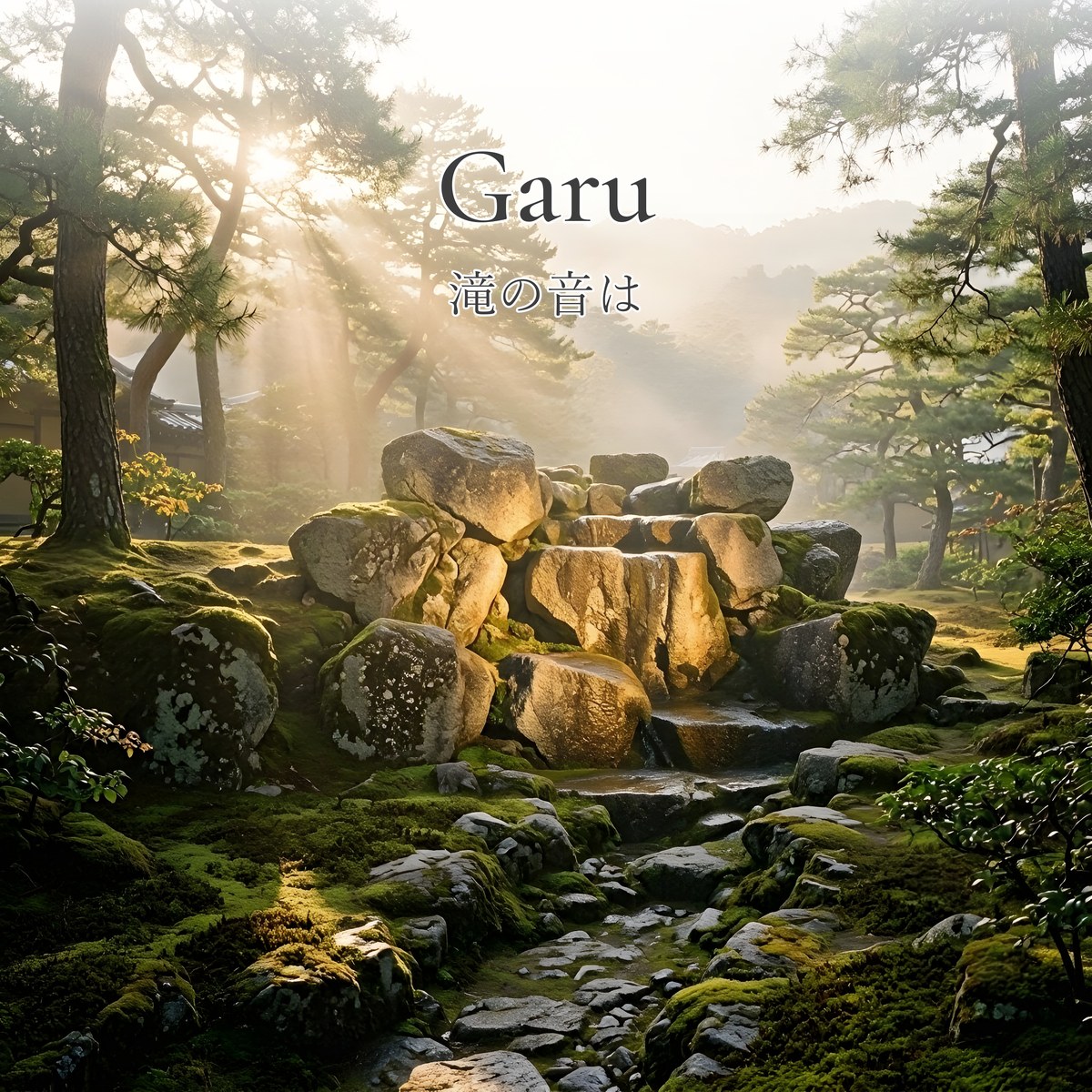
▶The sound of the waterfall ceased long ago, yet its name still flows on, and is heard throughout the world.
Fujiwara no Kintō (966-1041) was a court noble and poet of the mid-Heian period, son of the chancellor Fujiwara no Yoritada. He was famed for excelling in Japanese poetry, Chinese verse and music, and compiled the Wakan Rōeishū. This poem is about an old waterfall at Daikaku-ji in Saga, Kyoto, and is said to date from the ninth month of 999, when he visited with Fujiwara no Michinaga. Daikaku-ji was once a detached palace of Emperor Saga, and by then the water in its garden had stopped. The site of the Nakoso waterfall still remains north of Ōsawa Pond, and is a designated Place of Scenic Beauty.
The sound of the waterfall stopped long ago, yet its name has flowed on, and we still hear it. Standing at the site with no water and no sound, he describes how a name survives in words of flowing and hearing. Rather than mourning what was lost, he makes a discovery: even when form is gone, a name remains. That discovery is what gives the poem its brightness.
What we find most delightful in this poem is that it speaks of a soundless waterfall in the language of sound. Form disappears, but a name remains. That discovery does not belong only to Saga a thousand years ago. In Osaka today there is a name spoken every day, though the river has been filled in and there is no bridge to cross: Shinsaibashi. We set the song in this city so that what Kintō found at the waterfall could be heard in everyday life now. We did not want a song of mourning. Because the name remains, people still meet there today, and they still find each other. The original closing words repeat at the end because, a thousand years on, the voice of this poem can still be heard. The gliding vocal is the sound of a name that keeps on flowing.
滝の音は(拾遺集/大納言公任・百人一首55番)Garu JP
次は 心斎橋 と 声がする
降りるのは 僕と 人の波
橋なんて 見あたらない
渡ったことも 一度もない
ばあちゃんは 覚えていた
じいちゃんを 待った 欄干を
川を埋めた あの年に
水は どこかへ 行ったまま
かるた好きの ばあちゃんが
笑って 詠んだ 歌がある
滝の音は 絶えて久しく なりぬれど
名こそ流れて なほ聞こえけれ
川は とっくに ないのに
名前だけが 流れてる
今日も 電車が 呼んでいる
どの橋ですか と 旅の人
このへんです と 指をさす
いまは 車が 流れてる
それでも 写真を 撮っていく
心斎橋で 待ち合わせ
どの橋 なんて この街じゃ
誰も 聞かずに 手をふって
橋のない 橋で 会っている
駅の 看板の おしまいに
橋 と ひと文字 残ってる
滝の音は 絶えて久しく なりぬれど
名こそ流れて なほ聞こえけれ
川は とっくに ないのに
名前だけが 流れてる
僕も まだ 呼んでいる
千年前にも 枯れた滝の
そばに 立った 人がいて
名こそ流れて と 詠んだ声が
いまも ここまで 流れてる
ある日 地上に 出てみたら
車の 流れの その そばに
欄干だけが 立っていた
四つ葉の かたちを 残したまま
橋の名前を 刻んだまま
滝の音は 絶えて久しく なりぬれど
名こそ流れて なほ聞こえけれ
川は とっくに ないのに
名前だけが 流れてる
次は 心斎橋 と 声がする
あの欄干で 待っている
なほ聞こえけれ
なほ聞こえけれ
Taki no Oto wa (Shui-shu / Fujiwara no Kinto, Hyakunin Isshu No. 55) Garu JP
"Next stop, Shinsaibashi," says the voice
I get off with a wave of people
There isn't a bridge in sight
and I have never crossed one here
Grandma remembered
the railing where she waited for Grandpa
The year they filled in the river
the water went off somewhere and stayed gone
Grandma loved her karuta cards
and there's a poem she'd recite with a smile
"The sound of the waterfall stopped long, long ago,
yet its name flows on, and we still hear it"
The river's been gone for ages
but its name keeps on flowing
Today the train is calling it again
"Which bridge is it?" a traveler asks
"Somewhere around here," I say, and point
Now it's cars that flow by
and still they stop to take a picture
Meet me at Shinsaibashi
No one in this town ever asks
"Which bridge?" We just wave
and meet on a bridge that isn't there
At the very end of the station sign
one character remains: "bridge"
"The sound of the waterfall stopped long, long ago,
yet its name flows on, and we still hear it"
The river's been gone for ages
but its name keeps on flowing
And I am still calling it too
A thousand years ago, too
someone stood beside a dried-up waterfall
"Its name flows on," that voice recited
and it's still flowing, all the way to here
One day I came up above ground
and there, beside the flow of cars
stood a railing, all alone
still holding its four-leaf shape
still carved with the bridge's name
"The sound of the waterfall stopped long, long ago,
yet its name flows on, and we still hear it"
The river's been gone for ages
but its name keeps on flowing
"Next stop, Shinsaibashi," says the voice
I'm waiting at that railing
and we still hear it