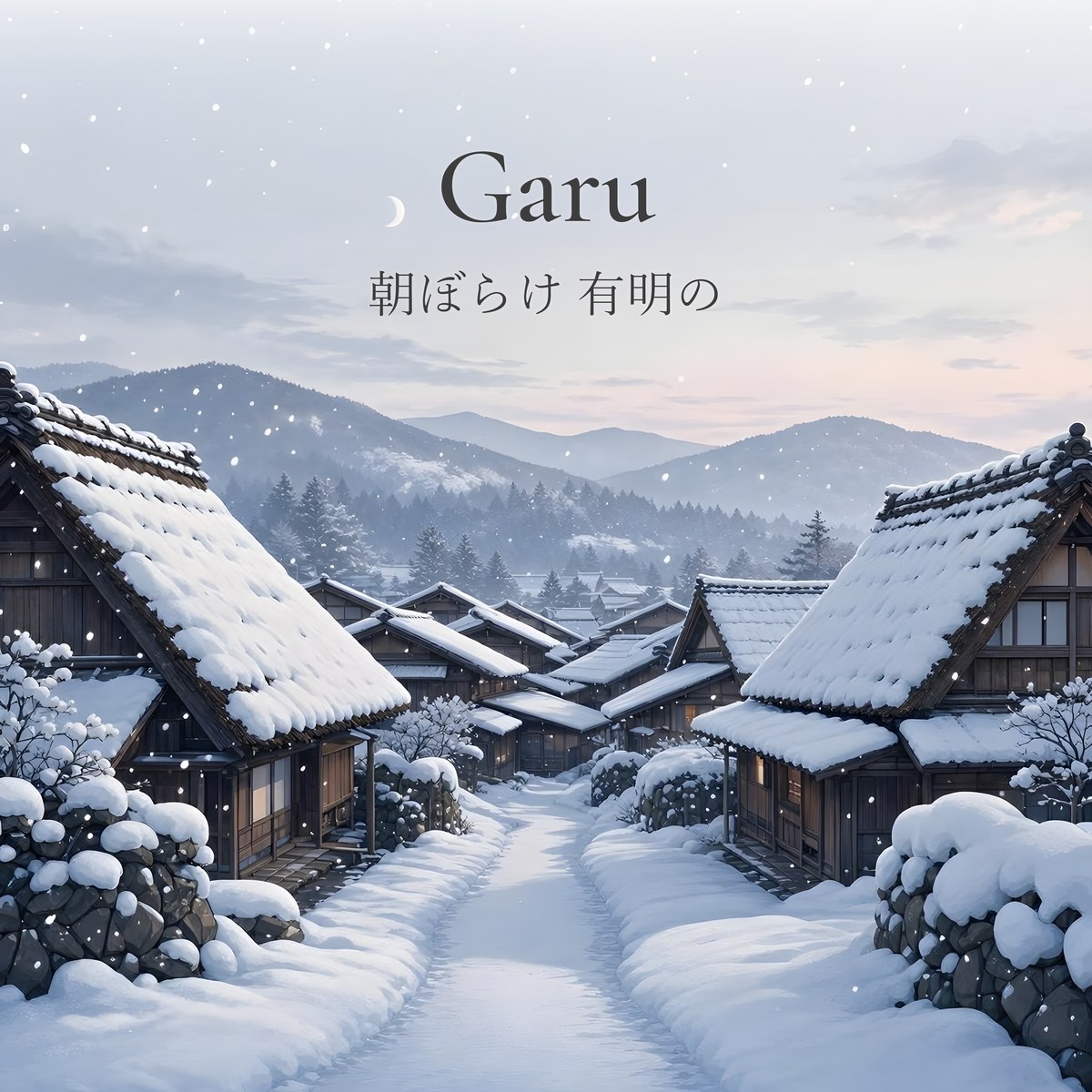
▶At daybreak, so bright I mistook it for the light of the lingering moon, white snow lies piled over the village of Yoshino.
Sakanoue no Korenori was a poet of the early Heian period, said to be a descendant of the general Sakanoue no Tamuramaro. He is one of the Thirty-Six Immortal Poets and was also known as a master of kemari, the court football game. The poem appears in the Winter section of the Kokin Wakashū, with the headnote "Composed on seeing snow fall when I had gone to the province of Yamato." To people of the capital, Yoshino in Nara stood for a mountain village deep in snow. "Ariake no tsuki" is the moon that still lingers in the sky after daybreak.
"Asaborake" is the time when night begins to pale into dawn. "Ariake no tsuki to miru made ni" means "so bright I mistook it for the light of the lingering moon." Waking at an inn on his journey, he finds it faintly bright outside. Thinking it is moonlight, he looks, and sees the snow that has piled up over the village of Yoshino in a single night. Surprise, and a quiet wonder. He does not put his feelings into words; he keeps only the one moment of mistaking snow for the moon.
What drew us to this poem was that Korenori says neither "beautiful" nor "surprised," and leaves us only the moment he mistook the snow for the moon. Because he says nothing, people a thousand years later can still remember that same breathless morning. Everyone has woken to find the world outside turned white. We laid that small happiness over a town morning today, and over Korenori's morning at an inn, looking at the same snow. Wanting to keep the town to yourself a little longer, while no one else is awake yet. We made that feeling into a song of glittering piano and strings, like the light of a snowy morning.
朝ぼらけ 有明の(古今集/坂上是則・百人一首31番)Garu JP
目覚ましより 先に 目が覚めた
カーテンの すきまが やけに 白い
まだ 月が 残っているのかと
毛布を はおって 窓に 近づく
車の 音も 鳥の 声も 聞こえない
カーテンを 開けたら 一面の 銀世界
朝ぼらけ 有明の月と 見るまでに
吉野の里に 降れる白雪
月じゃなかった ひと晩で
町が まるごと 変わってた
雪の 朝ぼらけ 朝ぼらけ
まだ 誰も 知らない
はるか昔 旅の途中で
同じ朝を 迎えた人がいた
宿の 板戸を そっと 開けて
有明の 月かと 見まごう ほどに
吉野山 峰も麓も 覆った雪を
思わず 歌に 詠みあげた
朝ぼらけ 有明の月と 見るまでに
吉野の里に 降れる白雪
足あとの ひとつもない
道が どこまでも つづく
雪の 朝ぼらけ 朝ぼらけ
はじめの 一歩を 待っている
眠ったままの 町を起こさず
しずかにひとり お湯をわかせば
やかんの湯気が 窓をくもらせ
くもりガラスに 指で輪をかく
すきまの向こう また白い朝
朝ぼらけ 有明の月と 見るまでに
吉野の里に 降れる白雪
もう少しだけ このままで
ひとりじめ しても いいかな
雪の 朝ぼらけ 朝ぼらけ
今日が はじまる まえに
吉野の里に 降れる白雪
ひと晩だけの 月明かり
Asaborake Ariake no (Kokin-shu / Sakanoue no Korenori, Hyakunin Isshu No. 31) Garu JP
I woke up before my alarm
The gap in the curtains is strangely white
Wondering if the moon is still out
I pull a blanket around me and go to the window
No sound of cars, no voice of birds
I open the curtains, and it's a silver world everywhere
"At the first light of dawn, so bright I took it for the lingering moon,
the white snow that has fallen on the village of Yoshino"
It wasn't the moon; overnight
the whole town had changed
Snowy dawn, snowy dawn
no one knows yet
Long ago, on a journey
there was someone who greeted the same morning
He slid open the wooden door of the inn
so bright it looked like the lingering moon
the snow covering Yoshino's peaks and foothills
he couldn't help but sing it into a poem
"At the first light of dawn, so bright I took it for the lingering moon,
the white snow that has fallen on the village of Yoshino"
Not a single footprint
the road goes on and on
Snowy dawn, snowy dawn
waiting for the very first step
Not waking the town still asleep
quietly, alone, I boil some water
The steam from the kettle fogs the window
on the clouded glass, I draw a circle with my finger
Beyond that little gap, the white morning again
"At the first light of dawn, so bright I took it for the lingering moon,
the white snow that has fallen on the village of Yoshino"
Just a little longer, like this
is it all right to keep it to myself?
Snowy dawn, snowy dawn
before today begins
the white snow that has fallen on the village of Yoshino
Moonlight for just one night